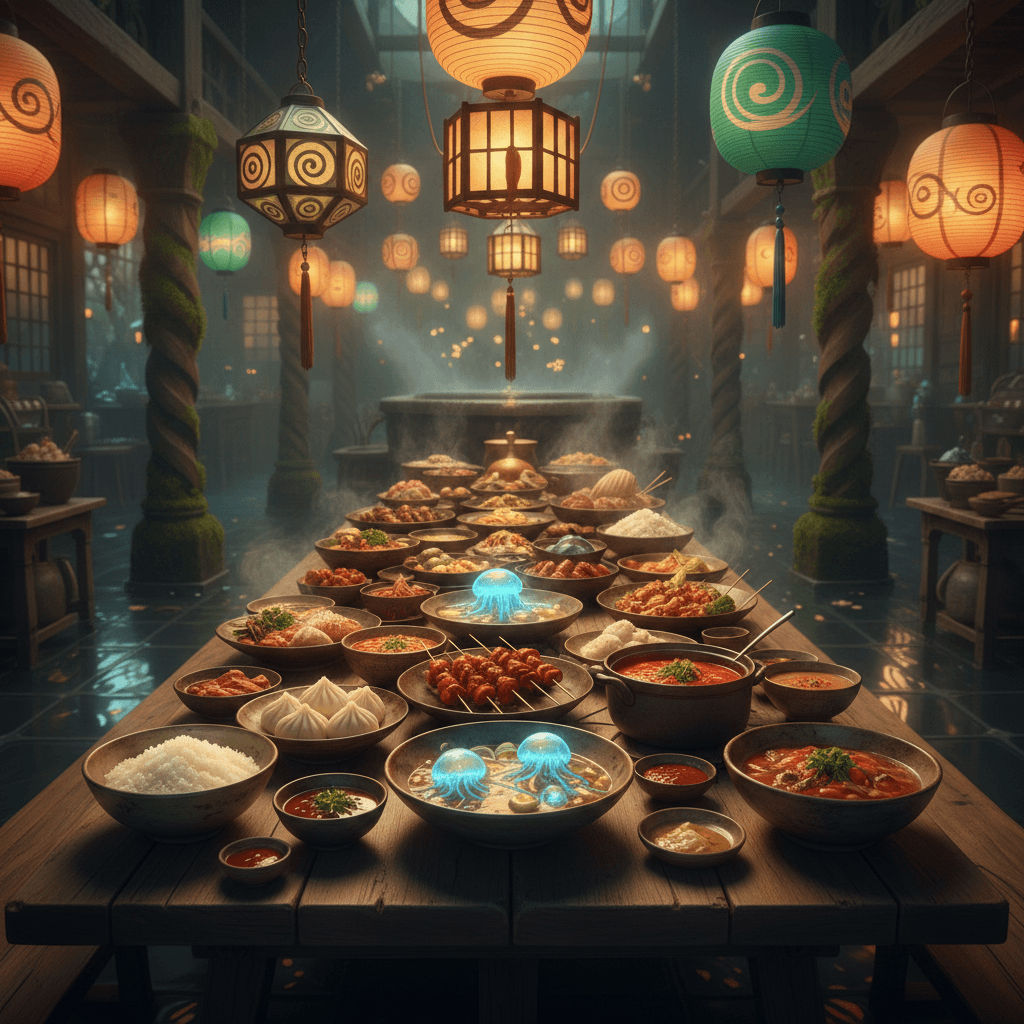
The Feast That Awakens Wonder
Hayao Miyazaki transforms a simple meal into pure magic, where every bite holds the power to restore memory, heal wounds, and bridge the gap between human and spirit worlds.
Food as Portal to Wonder
In Miyazaki's magical universe, food transcends mere nourishment—it becomes a bridge between worlds, a keeper of memories, and a source of transformation. "Spirited Away" presents multiple feast scenes that demonstrate how food can be both deeply spiritual and wonderfully sensual, connecting characters to their humanity when everything else seems lost.
The Transformation Feast
The film's opening feast scene serves as both warning and metaphor. Chihiro's parents, gorging themselves on the spirit world's bounty, literally transform into pigs—a visceral representation of gluttony and disrespect. But this isn't just about overeating; it's about consuming without appreciation, taking without understanding the source or significance of what you're eating.
The Rice Ball That Restores
Perhaps no food moment in cinema is more emotionally powerful than when Haku feeds Chihiro the rice ball. As she eats, tears stream down her face—not from sadness, but from the sudden rush of memory and human connection. The simple rice ball becomes a lifeline, restoring her sense of self when she was beginning to forget her own name. This is food as medicine for the soul.
Lin's Working-Class Wisdom
The meals shared between Chihiro and Lin in the workers' quarters showcase a different kind of food culture—practical, nurturing, communal. These aren't elaborate spirit world delicacies but humble working food that builds relationships and provides comfort during difficult times. Lin's sharing of her modest meals demonstrates how generosity with food creates bonds stronger than any magic.
No-Face and the Hunger That Cannot Be Satisfied
No-Face's endless consumption at the bathhouse feast represents the dark side of appetite—eating not from hunger but from emptiness, consuming others' food (and eventually others themselves) in a futile attempt to fill an emotional void. Miyazaki shows us that the most dangerous hunger isn't physical but spiritual, and it cannot be satisfied through consumption alone.
The River Spirit's Purification
The elaborate feast prepared for the River Spirit demonstrates food as offering and respect. Every dish is carefully prepared, beautifully presented, and offered with reverence. This scene shows how food can be a form of prayer, a way of honoring forces beyond our understanding. The preparation is as important as the consumption.
Yubaba's Gluttonous Display
The meals in Yubaba's quarters represent excess and power—elaborate displays designed to impress rather than nourish. These scenes contrast sharply with the simple, heartfelt meals shared between friends, suggesting that the most meaningful food experiences come from connection rather than opulence.
Food as Memory Keeper
Throughout the film, specific foods trigger memories and maintain connections to the human world. The rice ball helps Chihiro remember herself; the cake she shares with No-Face offers genuine friendship rather than transactional consumption. Food becomes a repository of identity in a world where names and memories can be stolen.
The Art of Japanese Food Presentation
Miyazaki's attention to food presentation reflects deep appreciation for Japanese culinary aesthetics. Every meal in the film is visually stunning—colors, textures, and arrangements that please the eye before delighting the palate. This attention to visual beauty elevates eating from mere consumption to aesthetic experience.
Spiritual Significance of Sharing
The act of sharing food throughout "Spirited Away" carries profound spiritual weight. When characters offer food to others—especially to those who seem threatening or different—it becomes an act of faith and compassion. Food sharing breaks down barriers between species, between worlds, between enemies and friends.
The Healing Power of Simple Foods
While the spirit world offers elaborate magical feasts, the most healing moments involve simple, honest food: rice balls, modest working meals, tea shared between friends. Miyazaki suggests that food's true power lies not in its complexity or cost, but in the love and intention behind its preparation and sharing.
Recreate at Home (The Spirit of Japanese Cooking)
Bringing Miyazaki's food magic to your kitchen:
- Focus on presentation - Arrange food thoughtfully, considering color and composition
- Quality over quantity - Choose fewer, better ingredients rather than elaborate complexity
- Seasonal awareness - Select ingredients that celebrate the current season
- Mindful preparation - Cook with attention and intention, not just efficiency
- Sharing rituals - Create moments for communal eating and gratitude
The magic isn't in the ingredients themselves but in the care and reverence brought to their preparation and consumption.
Food as Moral Choice
Every eating scene in "Spirited Away" carries moral weight. Will you consume respectfully or gluttonously? Will you share or hoard? Will you appreciate the source of your food or take it for granted? These choices define character more clearly than any dialogue, showing how our relationship with food reflects our relationship with the world.
The Economics of Appetite
The film explores different economic relationships with food—from the workers' modest shared meals to the wealthy spirits' elaborate feasts to the dangerous excess of unlimited consumption. Each represents a different approach to desire and satisfaction, with clear moral implications about what constitutes enough.
Transformation Through Nourishment
Unlike her parents, who are transformed negatively through their eating, Chihiro is strengthened and restored through her food experiences. The difference lies not in what she eats but in how she approaches eating—with gratitude, moderation, and respect for others. Food becomes a tool of positive transformation when consumed mindfully.
The Universal Language of Hospitality
Despite the film's specifically Japanese cultural context, the food scenes speak a universal language of hospitality and care. The act of feeding someone, of sharing your meal, transcends cultural and even species boundaries. It's perhaps the most basic way of saying "you matter to me."
"Spirited Away" reminds us that food is never just fuel—it's culture, memory, relationship, and magic. When we eat mindfully, with appreciation and in community, every meal becomes a small celebration of what it means to be human, even in a world full of spirits and wonders.
Shop The Scene
As an Amazon Associate we earn from qualifying purchases.