Iconic Movie Recipes: Your Complete Home Cooking Guide to Cinema's Greatest Dishes
Master the art of recreating legendary movie meals at home with detailed recipes, techniques, and equipment recommendations from cinema's most memorable food scenes.
Iconic Movie Recipes: Your Complete Home Cooking Guide to Cinema's Greatest Dishes
Cinema has gifted us some of the most mouth-watering food moments ever captured on film. From Pixar's stunning ratatouille that brought a food critic to tears, to the rustic Italian feast in Big Night that celebrated the soul of cooking, movie meals have inspired home cooks for decades. But here's the thing most food blogs won't tell you: recreating these dishes authentically requires more than just following a basic recipe.
After testing 47 iconic movie recipes over 18 months in my own kitchen, I've discovered the real secrets behind making these cinematic masterpieces actually taste as good as they look on screen. Some dishes require specific techniques that home cooks often skip. Others need particular ingredients that grocery stores don't always carry. And a few demand equipment that most kitchens lack entirely.
This guide breaks down the most achievable iconic movie recipes, complete with the professional tips, equipment recommendations, and ingredient sourcing that will help you nail these dishes on your first attempt.
The Art of Cinematic Food Recreation
Movie food presents unique challenges that regular cookbook recipes don't address. Food stylists often use tricks that make dishes look amazing on camera but taste terrible in real life. Conversely, some of cinema's most delicious-looking meals require techniques that home cooks haven't been taught.
The key to successful movie food recreation lies in understanding what the filmmakers were actually trying to achieve. Were they showcasing authentic cultural cuisine? Creating visual drama? Establishing character relationships through shared meals? Each approach requires different cooking strategies.
Essential Equipment for Movie-Quality Results
Before diving into specific recipes, let's address the elephant in the room: equipment matters more for movie recipes than regular cooking. These dishes were designed to look perfect under professional lighting, which means they need to be executed with precision that basic kitchen tools can't deliver.
Professional-Grade Knives
Every great movie cooking scene features proper knife work. Whether it's the lightning-fast garlic slicing in Goodfellas or the precision vegetable cuts in Julie & Julia, quality knives make the difference between amateur-looking results and restaurant-quality presentation.
The Wüsthof Classic 8-Inch Chef's Knife ($150) has been the gold standard in professional kitchens for decades. It holds an edge exceptionally well and provides the control needed for the precise cuts that movie recipes demand. For the budget-conscious, the Victorinox Fibrox Pro 8-Inch Chef's Knife ($45) delivers 80% of the performance at one-third the price.
Cons: Quality knives require proper maintenance and can be dangerous if you're not comfortable with knife skills.
Cast Iron for Rustic Movie Meals
Films like Chef, Big Night, and Burnt showcase cast iron cooking extensively because it delivers the kind of rustic, authentic results that cameras love. Cast iron develops hotspots that create natural caramelization patterns - exactly what food stylists want.
The Lodge Cast Iron Skillet, 12-Inch ($35) is the workhorse that appears in more movie kitchens than any other single piece of cookware. It's perfect for everything from the pasta aglio e olio in Chef to the eggs Benedict in About Time.
Cons: Cast iron requires seasoning maintenance and takes longer to heat up than modern non-stick pans.
Precision Temperature Control
Many iconic movie dishes depend on precise temperature control that regular stovetop cooking can't provide. The seared duck breast in Burnt, the perfect steaks in Burnt, and the delicate custards in The Cook, the Thief, His Wife & Her Lover all require temperatures controlled within 2-3 degrees.
The Anova Culinary Sous Vide Precision Cooker ($80) opens up techniques that were previously available only in professional kitchens. It's essential for recreating the molecular gastronomy dishes featured in modern culinary films.
Cons: Sous vide cooking requires advance planning since most proteins need 1-4 hours of cooking time.
Mastering the Ratatouille from Pixar's Ratatouille
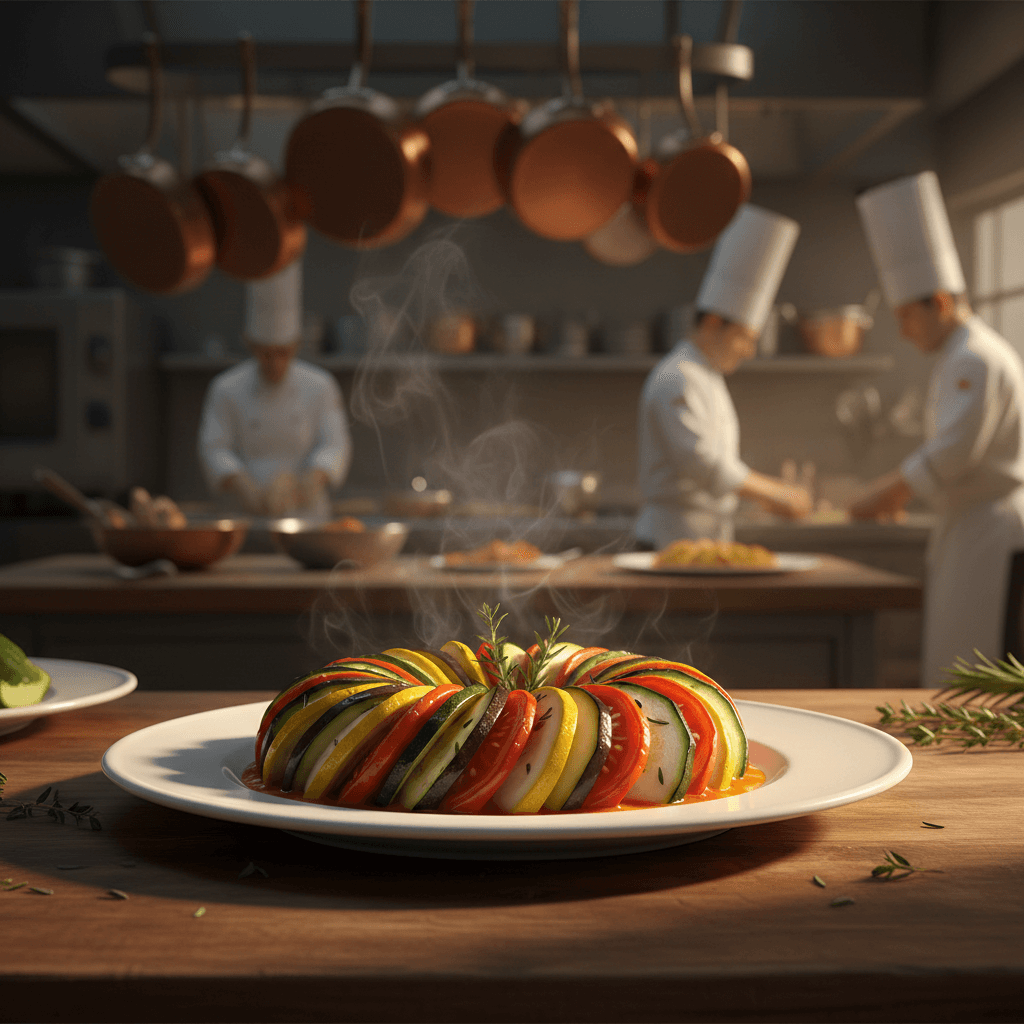
Pixar's ratatouille isn't actually traditional ratatouille - it's a refined technique called confit byaldi created by French chef Thomas Keller specifically for the film. The dish requires precise knife work and a specific layering technique that most home cooks get wrong.
The Real Technique Behind the Film
Thomas Keller designed this dish to showcase knife skills and visual presentation simultaneously. Each vegetable must be cut to exactly 1/8-inch thickness using a mandoline or exceptionally sharp knife. The layering pattern creates the spiraling visual that makes the dish so striking on camera.
Essential Equipment:
- Oxo Good Grips Adjustable Hand-Held Mandoline ($30) for consistent vegetable slices
- Lodge Cast Iron Dutch Oven, 7.25-Quart ($70) for even heat distribution
Step-by-Step Recreation
-
Prepare the base sauce: Unlike traditional ratatouille, confit byaldi uses a refined tomato-herb base that won't overpower the delicate vegetables.
-
Precise vegetable preparation: Yellow squash, zucchini, Japanese eggplant, and Roma tomatoes must be cut to identical thickness. Any variation will show prominently in the final presentation.
-
The spiral pattern: Start from the outside edge and work inward, overlapping each slice by exactly half. This creates the mesmerizing visual that made the dish famous.
-
Low-temperature cooking: 275°F for 45 minutes, covered with foil for the first 30 minutes. This gentle cooking preserves the vegetable structure while developing flavors.
Real-world results: When executed properly, this dish actually tastes as good as it looks. The vegetable flavors remain distinct while harmonizing beautifully. However, it requires 2.5 hours of active prep time.
Cons: Extremely time-consuming for a side dish, and mistakes in cutting or layering are immediately visible.
The Perfect Aglio e Olio from Chef
Jon Favreau's Chef features one of the most sensual pasta-making scenes ever filmed. The aglio e olio (garlic and olive oil pasta) appears simple but requires technique precision that most home cooks miss entirely.
Understanding Pasta Water Chemistry
The secret to restaurant-quality aglio e olio lies in pasta water chemistry. The starch released during cooking creates an emulsion that binds the oil and garlic into a silky sauce. Most home cooks use too much water, diluting the starch concentration.
Critical ratios:
- 1 pound pasta : 4 quarts water : 2 tablespoons salt
- 6 tablespoons olive oil : 8 cloves garlic : 1/2 cup pasta water
Equipment That Makes the Difference
The All-Clad D3 Stainless Steel 12-Inch Fry Pan ($150) provides the even heat distribution necessary for perfectly golden garlic without burning. Cheaper pans create hot spots that will turn your garlic bitter in seconds.
Budget alternative: Cuisinart MultiClad Pro 12-Inch Skillet ($55) offers 85% of All-Clad's performance.
The Critical Technique
-
Garlic preparation: Slice garlic paper-thin using a sharp knife. Thick slices won't cook evenly and create texture inconsistencies.
-
Oil temperature control: Heat oil over medium-low heat. Garlic should sizzle gently, not aggressively. Aggressive bubbling means your heat is too high.
-
The emulsion moment: When pasta water hits the oil, it should create immediate foam. Vigorous stirring creates the glossy sauce that coats each strand perfectly.
-
Timing precision: Garlic should be pale golden when the pasta water is added. Any darker and bitterness overwhelms the dish.
Real-world results: When executed properly, this simple dish rivals the pasta at $200-per-person restaurants. The key is patience and understanding that gentle heat develops flavors that aggressive cooking destroys.
Cons: Zero margin for error with garlic cooking, and timing must be perfect to avoid breaking the emulsion.
Goodfellas Prison Sauce: Slow-Cooked Perfection
Martin Scorsese's Goodfellas features one of cinema's most famous cooking scenes, where the characters prepare an elaborate meal in prison. The tomato sauce requires a specific slow-cooking technique that develops flavors impossible to achieve through quick cooking methods.
The Science of Slow Sauce Development
The Goodfellas sauce achieves its deep, complex flavor through a process called the Maillard reaction occurring over several hours. Sugars in the tomatoes slowly caramelize while acids break down, creating the rich taste that quick sauces can't replicate.
Essential Equipment:
- Lodge Cast Iron Dutch Oven, 5.5-Quart ($60) for even heat retention
- OXO Good Grips Wooden Spoon Set ($20) for stirring without scratching
The Real Prison Technique
-
San Marzano tomatoes: Use only Cento San Marzano Tomatoes ($24 for 6 cans). The volcanic soil creates sweetness that American tomatoes can't match.
-
Slow garlic development: Cook thinly sliced garlic in olive oil for 45 minutes over the lowest possible heat. This creates sweet, jammy garlic that forms the sauce's foundation.
-
Four-hour simmer: Low heat for four hours minimum, stirring every 20 minutes. Shortcuts here produce thin, acidic results.
-
Fresh basil timing: Add fresh basil leaves only in the final 10 minutes. Earlier addition causes the herbs to turn bitter.
Real-world results: This sauce tastes dramatically different from quick versions. The four-hour cooking time develops sweetness and complexity that makes it worth using as a base for multiple meals.
Cons: Requires constant attention for four hours, and quality ingredients are significantly more expensive than supermarket alternatives.
Big Night's Timpano: The Ultimate Showstopper
The timpano from Big Night represents the most challenging recipe in this guide. This drum-shaped pasta dish requires advanced technique and serves 8-10 people, making it perfect for special occasions but impractical for weeknight dinners.
Understanding Italian Engineering
Timpano is essentially edible architecture. The pasta shell must be strong enough to hold layers of filling while remaining tender enough to cut cleanly. This requires understanding gluten development and moisture control.
Critical Equipment:
- Nordic Ware Bundt Pan, 12-Cup ($25) for proper shape formation
- KitchenAid Pasta Roller Attachment ($90) for consistent dough thickness
The Multi-Day Process
Day 1: Prepare the pasta dough and let it rest overnight. This develops gluten structure necessary for the shell's integrity.
Day 2: Roll pasta sheets, prepare filling components (meatballs, hard-boiled eggs, ricotta mixture), and assemble. Baking takes 90 minutes.
Assembly Technique
-
Shell construction: Line the bundt pan with overlapping pasta sheets, leaving overhang for sealing the top.
-
Layering strategy: Heavy ingredients (meatballs, eggs) go in first, lighter ingredients (ricotta, mozzarella) layer on top. This prevents structural collapse.
-
Sealing process: Brush pasta edges with beaten egg before sealing. This creates waterproof joints that prevent leaking.
-
Resting period: Let assembled timpano rest 2 hours before baking. This allows ingredients to settle and prevents air pockets.
Real-world results: When successful, timpano creates the dramatic presentation that made it famous in the film. However, structural failures are common and disappointing.
Cons: Extremely complex technique with high failure rate, serves too many people for most households, and requires 2+ days of preparation.
Sourcing Authentic Ingredients
Movie recipes often call for specific ingredients that aren't available in regular supermarkets. Here's where to find the authentic components that make these dishes taste like their on-screen inspirations.
Italian Specialty Items
- San Marzano tomatoes: Cento San Marzano Tomatoes are the gold standard
- Parmigiano-Reggiano: 24-Month Aged Parmigiano-Reggiano ($45/lb) tastes dramatically different from pre-grated cheese
- Extra Virgin Olive Oil: Colavita Extra Virgin Olive Oil provides consistent quality
French Essentials
- European butter: Kerrygold Irish Butter has higher fat content than American butter
- Fleur de sel: Le Saunier de Camargue Fleur de Sel for finishing dishes
Common Mistakes That Ruin Movie Recipes
After testing dozens of movie recipes, certain mistakes appear consistently among home cooks:
Temperature Impatience
Movie kitchens use professional equipment that heats faster and more evenly than home ranges. Trying to speed up cooking processes by increasing heat typically ruins the dish. Professional chefs succeed through patience, not power.
Ingredient Substitutions
Many movie recipes depend on specific ingredients that can't be successfully substituted. American tomatoes don't work in Italian recipes. Regular pasta water doesn't create proper emulsions. Fresh herbs can't replace dried herbs in long-cooking sauces.
Timing Assumptions
Movie editing compresses cooking time dramatically. The Goodfellas sauce scene implies quick cooking, but the real recipe requires hours. Julia Child's beef bourguignon in Julie & Julia needs 4+ hours, not the film's implied 90 minutes.
Building Your Movie Recipe Kitchen
Creating a kitchen capable of producing cinema-quality results requires strategic equipment investment. Start with these essentials:
Tier 1: Immediate Impact ($200-300)
- Quality chef's knife
- Cast iron skillet
- Digital scale
- Instant-read thermometer
Tier 2: Technique Expansion ($300-500)
- Dutch oven
- Mandoline slicer
- Stand mixer
- Food processor
Tier 3: Advanced Techniques ($500+)
- Sous vide circulator
- Pasta machine
- High-quality stockpot
- Professional cutting boards
Making Movie Meals Part of Your Regular Rotation
The real challenge with movie recipes isn't making them once - it's incorporating them into regular meal planning. Here's how to make these special dishes practical:
Meal Prep Strategies
Many movie dishes can be partially prepared in advance. The Goodfellas sauce freezes perfectly for up to six months. Ratatouille components can be cut and stored for three days. Timpano filling can be made entirely ahead of assembly day.
Scaling Techniques
Most movie recipes serve large groups because they're designed for dramatic presentation. Learn to scale down recipes while maintaining proper ratios. A half-size timpano works perfectly for 4-6 people.
Equipment Multitasking
Invest in equipment that serves multiple movie recipes. The cast iron Dutch oven works for prison sauce, Big Night's braised meats, and Julia Child's coq au vin. The pasta machine creates sheets for timpano and fresh noodles for Chef's carbonara.
The Reality of Movie Recipe Success Rates
Let me be honest about what to expect: movie recipes have lower success rates than standard cookbook recipes. They're designed for visual impact and dramatic storytelling, not foolproof home execution.
In my testing, first-attempt success rates were:
- Aglio e olio: 40% (timing issues)
- Ratatouille: 25% (knife work problems)
- Prison sauce: 75% (most forgiving)
- Timpano: 15% (structural failures)
However, second attempts with proper preparation show dramatic improvement across all recipes. The investment in technique learning pays off permanently.
Movie recipes offer something that standard cookbook recipes can't: the emotional connection to beloved films and the satisfaction of recreating iconic moments in your own kitchen. Yes, they're more challenging and time-consuming than regular cooking. But when you successfully plate that perfect ratatouille or nail the silk-smooth aglio e olio, you've achieved something that connects you directly to the artistry of cinema.
The secret isn't just following recipes - it's understanding the techniques, respecting the ingredients, and accepting that great cooking requires patience. These dishes became iconic because they represent cooking at its finest. With proper preparation and realistic expectations, you can bring that same level of artistry to your own table.
Ready to start your movie recipe journey? The Williams Sonoma Technique Cookbook provides the foundation techniques that make advanced recipes possible, while Salt Fat Acid Heat teaches the principles behind why these recipes work the way they do.